Jan. 26, 2025
Mount Laojun is a unique natural and cultural phenomenon in central China that has incorporated thousands of years of spiritual history and stunning landscapes.
Geographical Location
The mountain is located in Luanchuan County, Henan Province, being part of the Qinling Mountain Range. Key features:
- Elevation: 2,297 meters above sea level
- Status: The most important center of Taoism
- Nickname: “Ecological Gene Bank.”
Spiritual Heritage
Taoist Traditions:
- Lao Tzu’s meditation site
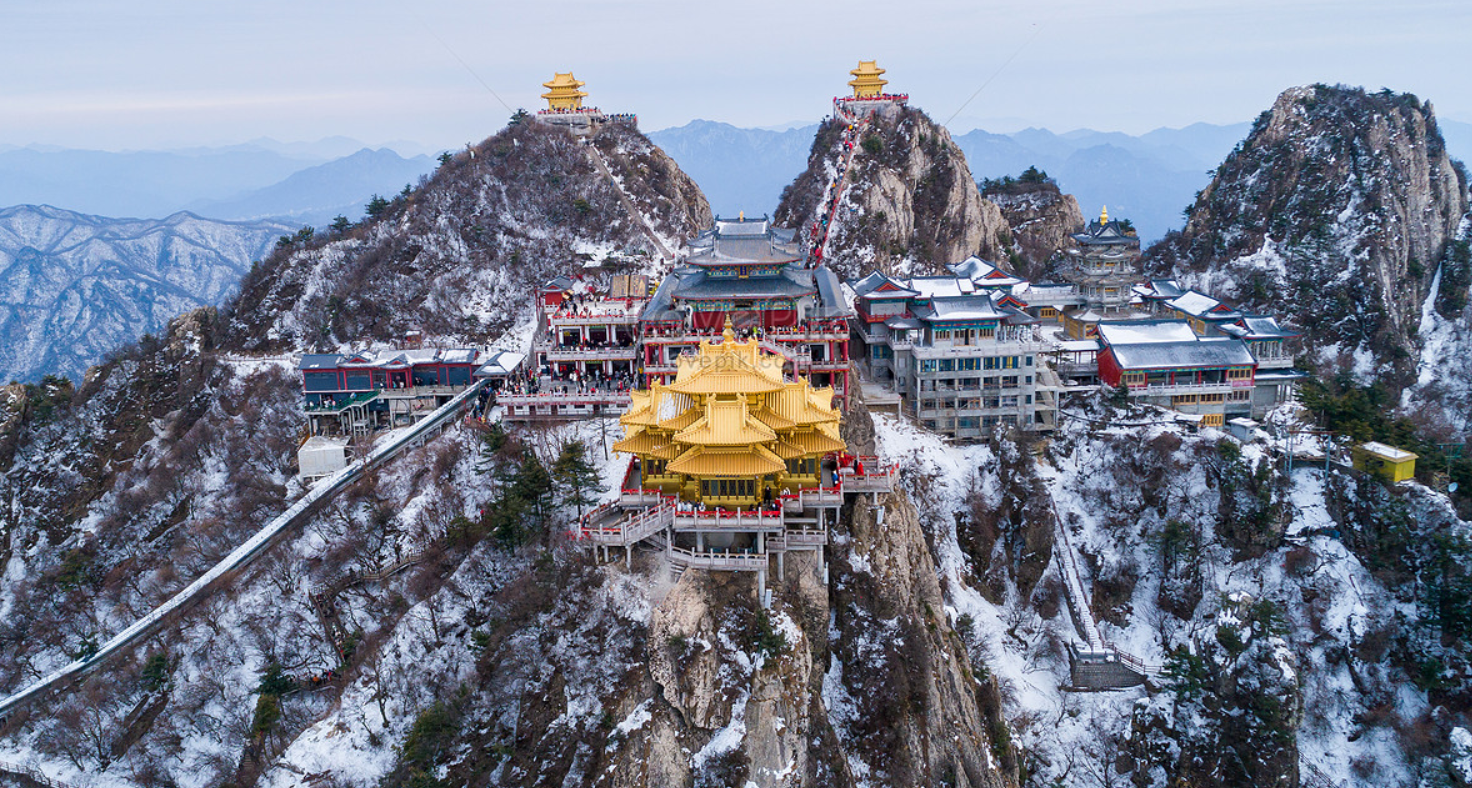
- 16 majestic summit temples
- ## Spiritual center of Taoism for over 2,000 years ##
Natural Wonders
Mount Laojun amazes tourists with its unique natural phenomena:
- “Sea of Clouds”
- “Sea of Colors”
- “Stone Forest”
- Dense pine forests
- Waterfalls and mountain rivers
Winter Fairy Tale
In winter, the mountain turns into a real magical space:
- Snow-covered temple complexes
- Temples “floating” above the clouds
- Enchanted snowy paths
Tourist Attraction
In 2024, the mountain welcomed more than 10 million tourists, becoming one of the most popular tourist destinations in China.
Laojun is not just a mountain, it is a portal to the world of ancient Chinese philosophy, where everyone can touch eternity and find inner harmony.